Monday, June 4, 2018

Live from Apple’s WWDC 2018 keynote

It’s that time again. This morning kicks off Apple’s annual World Wide Developers Conference. It’s a week of programming focused on developers, but this morning’s big event has a little something for everyone. Here’s a quick break down of what we can likely expect when Tim Cook takes the stage this morning.

The keynote will most likely be focused on announcements surrounding iOS 12 and macOS 10.14 — in fact, we got a bit of a preview of the latter over the weekend. WatchOS and HomeKit will probably get some love, as well, along with ARKit, which took center stage at the event, this time last year.

As for hardware — expect Apple to throw us a couple of bones on that front, as well — though the really big announcements around iPhone, iPad and the like, are probably being saved for another day. Beyond that, the sky — or the San Jose Convention Center ceiling, at least — is the limit.

We’ll see you right here at 10AM PT/1PM ET/5PM GMT


Microsoft Azure will soon offer machines with up to 12 TB of memory

Do you have an application that needs a lot of memory? Maybe as much as 12 terabytes of memory? Well, you’re in luck because Microsoft Azure will soon offer virtual machines with just that much RAM, based on Intel’s Xeon Scalable servers.

The company made this announcement in concert with the launch of a number of other virtual machine (VM) types that are specifically geared toward running high-memory workloads — and the standard use cases for this is running the SAP Hana in-memory database service.

So in addition to this massive new 12 TB VM, Microsoft is also launching a new 192 GB machine that extends the lower end of Hana-optimized machines on Azure, as well as a number other Hana options that scale across multiple VMs and can offer combined memory sizes of up to 18 TB.

Another new feature of Azure that’s launching today is Standards SSDs. These will offer Azure users a new option for running entry-level production workloads that require consistent disk performance and throughput without the full price of what are now called “premium SSD.” The Standard SSDs won’t offer the same kind of performance, though, but Microsoft promises that developers will still get improved latency, reliability and scalability as compared to standard hard disks in its cloud.


Microsoft promises to keep GitHub independent and open

Microsoft today announced its plans to acquire GitHub for $7.5 billion in stock. Unsurprisingly, that sent a few shock waves through the developer community, which still often eyes Microsoft with considerable unease. During a conference call this morning, Microsoft CEO Satya Nadella, incoming GitHub CEO (and Xamarin founder) Nat Friedman and GitHub co-founder and outgoing CEO Chris Wanstrath laid out the plans for GitHub’s future under Microsoft.

The core message everybody on today’s call stressed was that GitHub will continue to operate as an independent company. That’s very much the approach Microsoft took with its acquisition of LinkedIn, but to some degree, it’s also an admission that Microsoft is aware of its reputation among many of the developers who call GitHub their home. GitHub will remain an open platform that any developer can plug into and extend, Microsoft promises. It’ll support any cloud and any device.

Unsurprisingly, while the core of GitHub won’t change, Microsoft does plan to extend GitHub’s enterprise services and integrate them with its own sales and partner channels. And Nadella noted that the company will use GitHub to bring Microsoft’s developer tools and services “to new audiences.”
With Nat Friedman taking over as CEO, GitHub will have a respected technologist at the helm. Microsoft’s acquisition and integration of Xamarin has, at least from the outside, been a success (and Friedman himself always seems very happy about the outcome when I talk to him), so I think this bodes quite well for GitHub. After joining Microsoft, Friedman ran the developer services team at the company. Wanstrath, who only took over the CEO role again after its last CEO was ousted after harassment scandal at the company, had long said that he wanted to step down and take a more active product role. And that’s what’s happening now that Friedman is taking over. Wanstrath will become a technical fellow and work on “strategic software initiatives” at Microsoft.

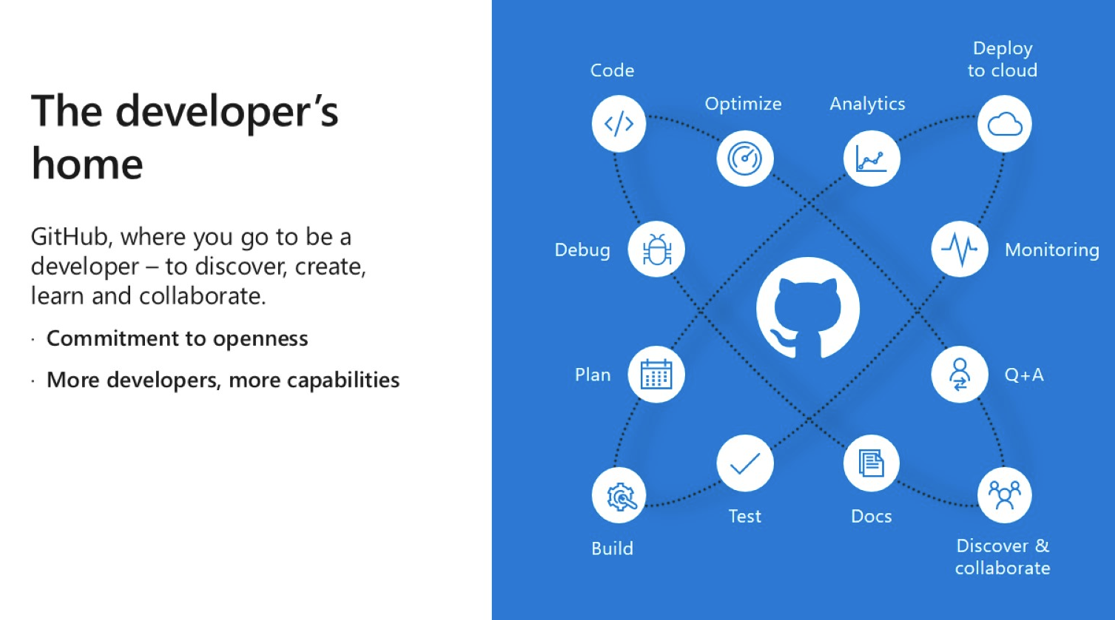
During today’s call, Friedman also stressed Microsoft’s commitment to keeping GitHub as open as it is today — but he also plans to expand the service and its community. “We want to bring more developers and more capabilities to GitHub, he said. “Because as a network and as a group of people in a community, GitHub is stronger, the bigger it is.”

As for the product itself, Friedman noted that everything GitHub does should be about making a developer’s life easier. And to get started, that’ll mean making developing in the cloud easier. “We think broadly about the new and compelling types of ways that we can integrate cloud services into GitHub,” he noted. “And this doesn’t just apply to our cloud. GitHub is an open platform. So we have the ability for anyone to plug their cloud services into GitHub, and make it easier for you to go from code to cloud. And it extends beyond the cloud as well. Code to cloud. code to mobile, code to edge device, code to IoT. Every workflow that a developer wants to pursue, we will support.”
Another area the company will work on is the GitHub Marketplace. Microsoft says that it will offer all of its developer tools and services in the GitHub Marketplace.

And unsurprisingly, VS Code, Microsoft’s free and open source code editor, will get deeply integrated integrated GitHub support.

“Our vision is really all about empowering developers and creating a home where you can use any language, any operating system, any cloud, any device for every developer, whether your student, a hobbyist, a large company, a startup or anything in between. GitHub is the home for all developers,” said Friedman.

It’s unclear whether all of these commitments today will easy developers’ fears of losing GitHub as a relatively neutral third-party in the ecosystem.

Nadella, who is surely aware of this, addressed this directly today. “We recognize the responsibility we take on with this agreement,” he said. “We are committed to being stewards of the GitHub community, which will retain its developer-first ethos operate independently and remain an open platform. We will always listen to develop a feedback and invest in both fundamentals as well as new capability once the acquisition closes.

In his prepared remarks, Nadella also stressed Microsoft’s heritage as a developer-centric company and that is it already the most active organization on GitHub. But more importantly, he addressed Microsoft’s role in the open source community, too. “We have always loved developers, and we love open source developers,” he said. “We’ve been on a journey ourselves with open source and the open source community. Today, we are all in with open source. We are active in the open source ecosystem. We contribute to open source project and some of our most vibrant developer tools and frameworks are open-sourced when it comes to our commitment to all source judges, by the actions we have taken in the recent past our actions today and in the future.”


How to watch the live stream for today’s Apple WWDC keynote

Apple is holding a keynote today at the San Jose Convention Center, and the company is expected to unveil new updates for iOS, macOS, tvOS, watchOS and maybe also some new hardware. At 10 AM PT (1 PM in New York, 6 PM in London, 7 PM in Paris), you’ll be able to watch the event as the company is streaming it live.

Apple is likely to talk about some new features for all its software platforms — WWDC is a developer conference after all. Rumor has it that Apple could also unveil some MacBook Pro update with new Intel processors.

If you have the most recent Apple TV, you can download the Apple Events app in the App Store. It lets you stream today’s event and rewatch old events. Users with old Apple TVs can simply turn on their devices. Apple is pushing out the “Apple Events” channel so that you can watch the event.

And if you don’t have an Apple TV, the company also lets you live-stream the event from the Apple Events section on its website. This video feed works in Safari and Microsoft Edge. And for the first time, Apple says that the video should also work in Google Chrome and Mozilla Firefox.

So to recap, here’s how you can watch today’s Apple event:

  • Safari on the Mac or iOS.
  • Microsoft Edge on Windows 10.
  • Maybe Google Chrome or Mozilla Firefox.
  • An Apple TV gen 4 with the Apple Events app in the App Store.
  • An Apple TV gen 2 or 3, with the Apple Events channel that arrives automatically right before the event.

Of course, you also can read TechCrunch’s live blog if you’re stuck at work and really need our entertaining commentary track to help you get through your day. We have a big team in the room this year.


The race to build autonomous delivery robots rolls on

It’s been a busy year in delivery robot land.

Starship Technologies sounded the starting gun to bring autonomous delivery vehicles to market with a $17.2 million round led by Daimler back in January 2017. Then in January this year the Mountain View, Calif.-based company Nuro, raised the curtain on its own vision for robo-delivery with a whopping $92 million in funding. Meanwhile, upstart Robomart has its own notion for delivery vehicles that it unveiled at CES. And not to be outdone, everyone’s favorite Chinese retail powerhouse, Alibaba, announced its own self-driving delivery vehicle.

Now, there’s Boxbot, the still-stealthy startup developing autonomous delivery somethings, which has picked up new cash as the race to build delivery bots rolls on.

Boxbot is a latecomer in the field. The Oakland-based company boasts impressive pedigrees from its founders — former Tesla engineer Austin Oehlerking and Mark Godwin, an entrepreneur who was working on improving logistics services through machine learning before he was acqui-hired by Uber.

As part of the new $7.5 million round, which was led by Artiman Ventures with participation from Toyota AI Ventures, Boxbot’s bulking up its executive team. The company poached Steve Sanchez from Amazon Logistics, where he was working on Amazon FlexAmazon’s crowdsourced delivery service.

The investment is also the first in an autonomous delivery company for Toyota AI Ventures, and one of at least five the firm has made since its launch in 2017.

For the last few years, automakers have spent several millions launching investment funds to tap startup expertise around technologies of autonomous vehicles.

In January, Renault, Nissan and Mitsubishi launched the $1 billion Alliance Ventures fund to invest in new automotive technologies. The firm has made $50 million in commitments already to the Sinovation Ventures fund in China and the Maniv Mobility investment fund — focused on mobility — in Israel. Volvo has its own Cars Tech Fund, to invest in startups focused on new mobility technology and BMW is investing $500 million in autonomous vehicles through its iVentures fund.

These commitments are part of a broader acknowledgement from the world’s biggest automakers that their industry is changing faster than their internal research and development teams can address.

The delivery dilemma

Delivery is emerging as a crucial service in the new world of autonomous mobility. From the dream of autonomous long haul trucking to last mile delivery to personal transportation, companies are scrambling to develop new technology. McKinsey predicts that autonomous vehicles will make up 85% of last mile deliveries by 2025. That’s a huge slice of a massive market, that Toyota AI Ventures managing director Jim Adler called “a global problem that McKinsey & Company priced at more than $80 billion in 2016.”

With a market that large, there’s no wonder it’s so tantalizing a problem for automakers of all stripes to try and solve.

“Over the next few years, self-driving vehicles will transform the last-mile, making it cheaper to make deliveries and easier to receive them,” said Brian Wilcove, a partner at Artiman Ventures and investor in Boxbot.

And Toyota’s Adler sees Boxbot as an extension of the technologies that have solved the problem of autonomy inside warehouses at companies like Amazon.

“Logistics automation within warehouses has made remarkable progress in the last decade due to advances in robotics and automated interfaces that streamline interactions between human and supply chains. An inflection point came in 2012 when Amazon bought Kiva which put them on a path to automate their fulfillment centers,” Adler wrote in a blog post. “The same autonomous technologies (i.e., sensors, perception, prediction, planning) used to pack boxes in the warehouse are now being pressed into the service of delivering those packages that last mile to your door  — the most complex and expensive leg of the supply chain.”


Student developers arrive in full force for Apple’s WWDC

As the developer community prepares for Apple to unveil its latest software efforts at the company’s WWDC keynote later this morning, there are a younger subset of student developers feverishly roaming about excited to see what they can build next too.

WWDC is a pretty pricey affair at $1,599 per ticket. Like some other tech companies, Apple has opted to make it a bit easier for students to attend their conference. They’ve done so through a scholarship where younger developers can submit applications and, if selected, get into the event for free with their lodging paid for as well.

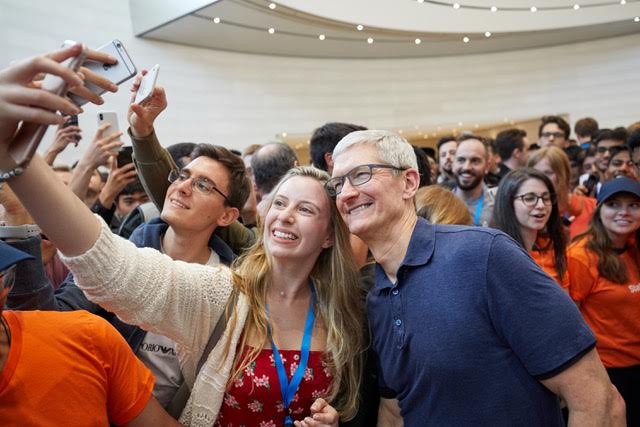
The more than 350 scholarship recipients this year represented 42 different countries and 34 languages. This year, those students got another added perk as their regular agenda was interrupted by a trip to Steve Jobs Theater on the Apple Park campus and a meet-and-greet with CEO Tim Cook. Later, Cook tweeted a video of what some of the students were working on, saying, “Nothing inspires us more than fresh ideas.”

Photo: Apple

I had the chance to sit down with a few of these young attendees, the youngest of whom was 16 years old (though students as young as 13 could apply), and chat about some of the things that they were building.

“This is my third year at WWDC,” Nathan Flurry, 19, told TechCrunch.”I grew up in a very rural community and I rarely ever left the town, so WWDC was like the first time I got to meet people who cared about the same thing I did.”

As part of the application, students had to build and submit an interactive Swift playground that could be experienced in a few minutes. Flurry built a visual programming language powered by Apple Pencil interactions.

Another student I chatted with, Joseph Lou, 16, submitted a project for the scholarship that was aiming to recreate the system which the late Stephen Hawking used to communicate. “The app that I built for this scholarship was actually my first app and it was also my first time working with Swift,” Lou said.

It was clear that all of these exceedingly bright teens were also working on some pretty big projects of their own. Gabrielle Ecanow, 18, is working on an app called Study Buddy that allows students to coordinate tutoring and studying. Roland Horváth, 17, has built several apps, the latest of which is Try Not to Smile, which plays a bunch of funny videos for users and utilizes the iPhone’s front camera to see how long they can make it without cracking a smile.

Harish Yerra, 16, built an app called Greeta that allows users to turn hand-written notes into greeting cards.

“I started programming when I was 12, and I just thought it would be super cool to build an iOS app,” Yerra told TechCrunch. “I’d say WWDC 2016 was a major breaking point because that’s when I actually met a couple of my best friends and we went on to build an app…”

As the group heads into the conference starting Monday, many of them are focused on using the opportunity to connect with other developers and see what they can build next.

“I come back for the connections,” Flurry said. “The keynote is great, I love being here and it’s cool to see it, but I really love being around all of the engineers and meeting other developers who share a passion.”


Walmart sells 80% of its Brazilian operation to Advent Intl, will record $4.5B loss as a result

Walmart’s ongoing push to cut away unprofitable or slow-growing international operations, to shore up its resources to compete against Amazon at home and in Asia on digital fronts, had another development today. The world’s largest retailer today announced that it has finalised a deal to sell 80 percent of its business in Brazil to private equity firm Advent International, with Walmart keeping the remaining 20 percent.

The deal has been in the works for months and is expected to close later this year.

Walmart and Advent are not disclosing the terms of the deal (we are asking) but Walmart did note in a statement that it would record a non-cash net loss of $4.5 billion in Q2 as a result.

“A significant portion of the net loss is due to the recognition of cumulative foreign currency translation losses and the final loss could fluctuate significantly due to changes in currency exchange rates up to the date of close,” noted Walmart.

Although Brazil represents the biggest single market in Latin America, the company has found it a struggle to grow that business substantially and last quarter said that it would wind down its first-party e-commerce business in Brazil, too. “Walmart is committed to building strong, resilient businesses that continuously adapt to local customers’ needs in a rapidly changing world,” said Enrique Ostale, EVP and CEO of Walmart UK, Latin America and Africa, in a statement. “We will retain a stake in Walmart Brazil and continue to share our global retail expertise, giving our Brazil business the best opportunity for long-term growth, providing opportunities for associates and low prices for customers.”

Advent is a prolific investor and controls a number of businesses in Brazil, including many retail companies, and the idea appears to be to use some of that to expand the operation in ways that Walmart hadn’t managed to do on its own.

“We have been in Brazil for over 20 years and are excited about this partnership with one of the country’s leading retailers,” said Patrice Etlin, a Managing Partner at Advent International in Brazil, in a statement. “We believe that with our local market knowledge and retail expertise we can position the company to generate significant results and reach new levels of success in Brazil. We plan to invest in the business, work with the Walmart Brazil management team, associates, Walmart and our industry advisors to create a more agile and modern company to accelerate its development and improve the customer experience.”

Walmart stepping back from its Brazil efforts comes at the same time as it is stepping up in another so-called BRIC economy.

The divestment comes just weeks after Walmart announced that it would be taking a majority stake in Flipkart, the largest online retailer in India, its largest deal to date. To double down on growth in Asia and also to compete better against Amazon in online retail globally, Walmart is taking a 77 percent stake in the Indian startup for $16 billion. Just before that, Walmart had announced that it would be selling a majority of its holdings in Asda, its UK business, to local rival Sainsbury’s. Unlike the Brazil deal, that Asda divesture will net Walmart about $4 billion.


Labels